Contains affiliate links, see disclosure below.
Home / Guides / Tackle & Gear
First-Ice Safety: How Thick Is Safe, and What to Carry
Short answer: Stay off ice under 4 inches. Per the Minnesota DNR, 4 inches of new clear ice holds a person on foot, 5–7 inches a snowmobile or small ATV, and 9–10 inches a small car. Double those numbers for white ice, check as you go, and carry ice picks, a spud bar and a throw rope.
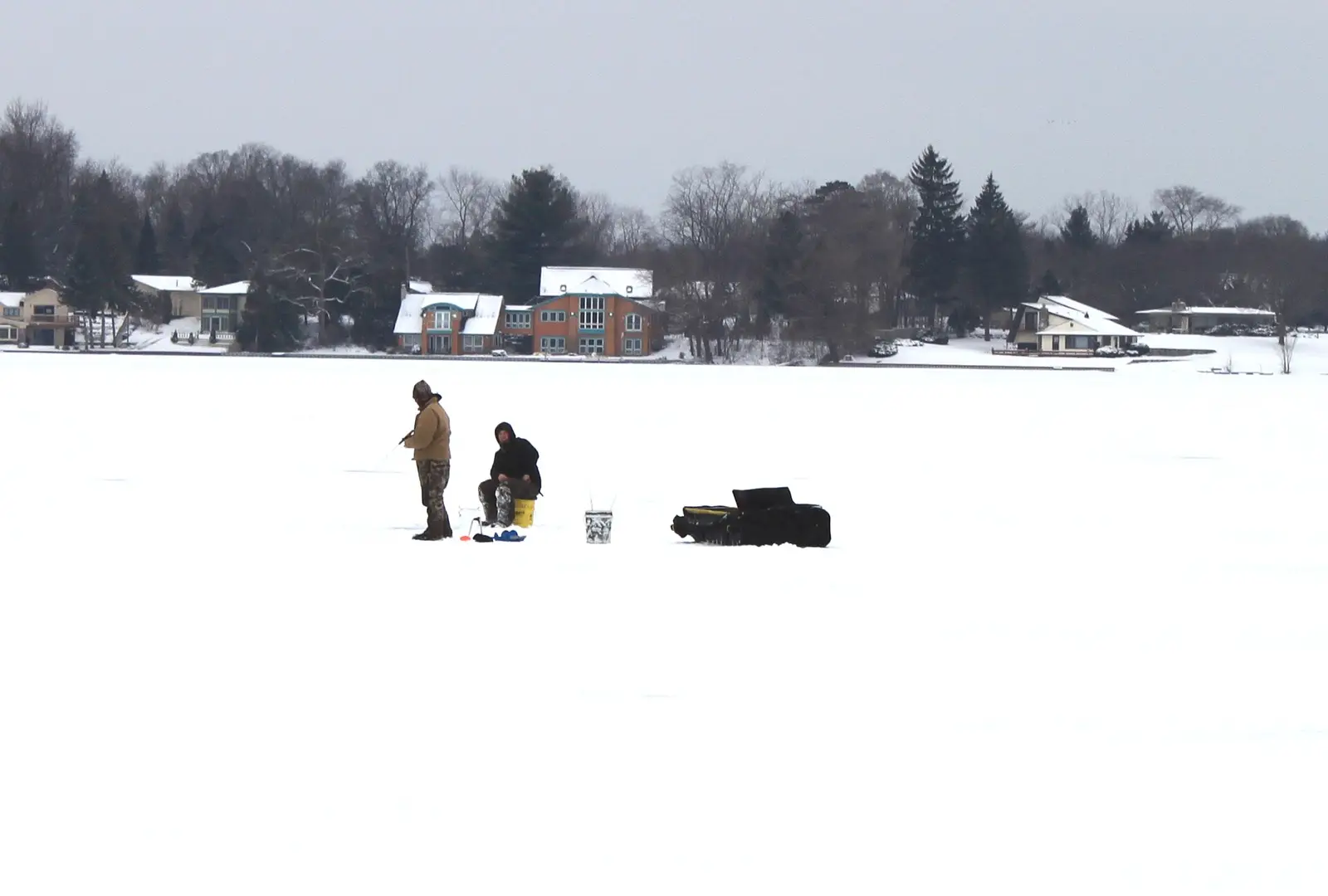

Every year somebody goes through on early ice, and it's often someone who's done it plenty of times and got in a hurry. Below are the published guidelines and the habits that go with them. None of it replaces drilling and checking yourself.
Thickness guidelines (new, clear ice only)
| Clear ice | What it's good for |
|---|---|
| Under 4 in | Stay off |
| 4 in | Ice fishing on foot |
| 5–7 in | Snowmobile or small ATV |
| 7–8 in | Side-by-side ATV |
| 9–10 in | Small car or SUV |
| 11–12 in | Medium SUV or small truck |
| 13 in | Medium truck |
| 16–17 in | Heavy-duty truck |
| 20 in+ | Heavy-duty truck with wheelhouse |
Source: Minnesota DNR, "General ice thickness guidelines" (dnr.state.mn.us/safety/ice/thickness.html), checked October 2026.
White ice counts for half
When snow melts and refreezes on top of the lake it makes white, cloudy ice. The Minnesota DNR says it's only about half as strong as new clear ice, so double the numbers above. Late-season ice that's gone gray and honeycombed is worse still.
One measurement isn't enough
Ice can be two feet thick in one spot and an inch thick a few yards away, per the same DNR page. Springs, current, inlets, narrows, docks and pressure ridges all thin it. On a lake you don't know, spud or drill every few steps on the way out.
Parking on the ice
The DNR says to park vehicles at least 50 feet apart and move them every two hours. Drill a hole next to the truck: if water comes up over the top, the ice is sinking and it's time to move. Parked loads need thicker ice than moving ones.
What to carry
- Ice picks around your neck, outside your coat.
- A spud bar to check ahead on early ice. If it goes through in one or two hard blows, turn around.
- A throw rope in the sled.
- A flotation-assist suit for early and late ice. See the float suit guide; those suits are not Coast Guard-approved PFDs.
- A phone in a waterproof pouch, and tell someone which lake you're on.
- A CO alarm if you run a heater. See the heater guide.
Quick questions
How thick does ice need to be to walk on?
At least 4 inches of new, clear ice, per the Minnesota DNR. Double that for white ice.
How thick for a snowmobile?
5 to 7 inches of clear ice under the same guidelines.
Related guides
- Ice Jigs & Plastics: A Northwoods Starter Box
- Thermal Tip-Ups: HT Polar Therm vs Polar Therm Extreme
- Float Suits for Ice Fishing: Striker Climate vs Clam Rise V3
- Ice Rods & Reels: Building a Panfish and Walleye Setup
Written by Cory Arnold, Iron County, Michigan. Specs checked October 2026.
Heads up: Ice Fish Deals may earn a commission from links on this site at no cost to you. Prices shown come from my price scanner and are accurate only as of the time stamped next to them. Prices change, so confirm at the store before you buy. Disclosure